How to Design a Custom Home Office Around Your Hybrid Work Routine
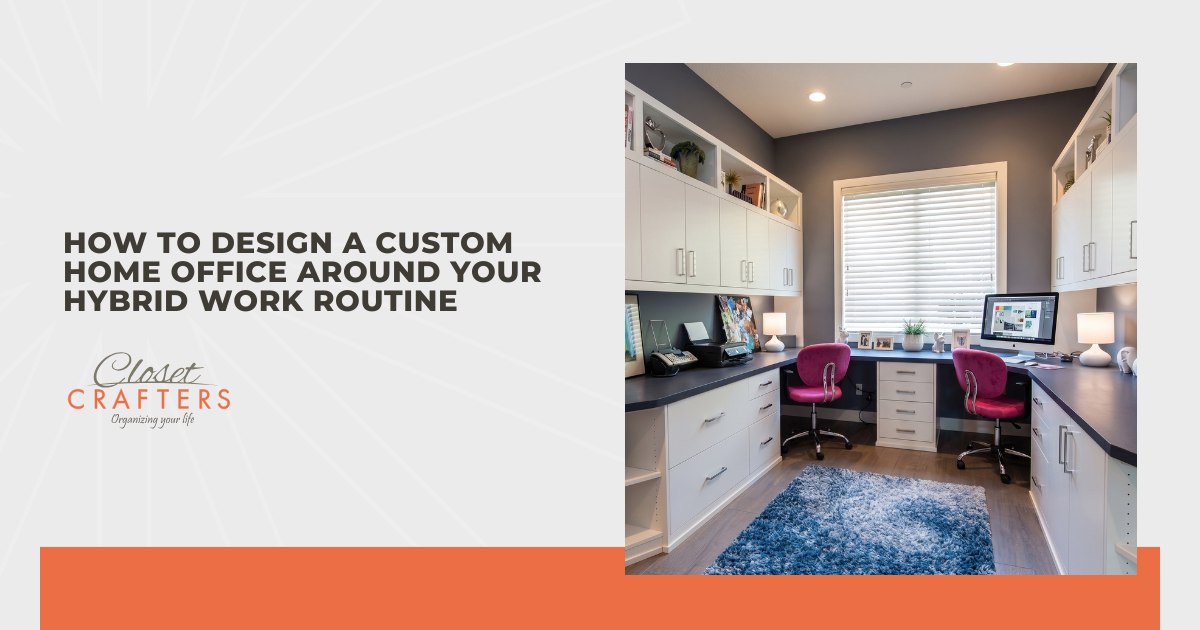
Hybrid schedules have a sneaky way of blurring the line between where you rest and where you get things done. That’s exactly why your home office deserves more thought than a spare desk shoved into the corner. Most hybrid workers never notice how much their workspace shapes their daily output until something feels off. I've found that small design choices quietly determine whether your days feel focused or scattered, and that friction often comes from a space that wasn't built with your routine in mind.
Designing a custom home office around your hybrid work routine starts with one honest question: how do you actually use your space on any given day? Your setup needs to handle deep focus work, back-to-back video calls, and quick task-switching without turning any of those into a struggle. A well-planned layout, smart storage, and the right lighting can transform how productive and comfortable you feel at home. When your space fits your rhythm, you spend less time managing distractions and more time doing your best work.
Think of this as your shortlist for building a home office that actually fits your hybrid rhythm. I've narrowed it down to the eight things worth your time and attention:
- Create a dedicated work zone that separates home from hustle
- Invest in ergonomic furniture that supports you all day
- Build smart storage solutions to keep clutter out of sight
- Layer your lighting for focus, video calls, and late nights
- Set up a tech hub that keeps cords and devices organized
- Design for flexibility so your space works on any schedule
- Add personal touches that make you want to show up
- Carve out a quiet corner for calls and deep focus
Try these next, and you'll turn one of those cramped home offices into a setup that actually earns its spot in your house.
Create a Dedicated Work Zone That Separates Home From Hustle
Blurred boundaries wear you down faster than any workload. When your laptop lives on the kitchen table, your brain never gets the signal to switch off, so rest and work bleed into each other all day. Giving your job a fixed spot in the house creates a clear line between the two, and your focus improves the moment you sit down.
Physical separation matters more than square footage. You don't need a spare room to build a real work zone, since a well-planned nook or a corner of your bedroom can do the job with the right setup. I've helped plenty of clients carve out a full home office from an underused alcove, and they're always surprised by how much sharper their days feel once the space belongs to work alone.
Consistency turns that zone into a habit. Sit in the same spot each morning and your body starts treating it like a trigger for deep concentration. Once you build that association, stepping away at the end of the day feels just as natural as clocking out at a traditional office.
Invest in Ergonomic Furniture That Supports You All Day
Comfort isn't a luxury when you're logging seven or eight hours at a desk. Poor seating shows up as back pain, stiff shoulders, and that afternoon slump that kills your momentum. Good ergonomic furniture keeps your body aligned so you can stay productive without paying for it later.
Smart choices here pay off in years of daily use, and these are the pieces I steer clients toward first:
- Adjustable Chair with Lumbar Support: Your chair carries the most weight in any home office, so pick one that adapts to your spine. Look for adjustable height, armrests, and lower-back support to protect your posture.
- Sit-Stand Desk: Switching between sitting and standing keeps your energy up and eases pressure on your lower back. Even a few standing hours a day makes a noticeable difference by evening.
- Monitor at Eye Level: Keeping your screen at eye height stops you from craning your neck forward. Pair a riser or arm with your setup to hold everything at the right angle.
Fit beats price every time when it comes to these investments. I always tell people to test a chair the way they'd test a mattress, because what feels fine for ten minutes can betray you by mid-afternoon. Choose pieces that match your body and your routine, and they'll earn their keep for years.
Build Smart Storage Solutions to Keep Clutter Out of Sight
Visual chaos drains your attention even when you're not looking directly at it. Stacks of paper, tangled supplies, and random gear compete for mental space and slow you down. Purposeful storage clears the surface so your mind can settle on the task in front of you.
Custom cabinetry beats off-the-shelf bins because it fits your exact space and your exact stuff. Built-in drawers, shelves, and cabinets tuck away the things you need without swallowing your floor space. One of the most common mistakes I see is people designing storage around clutter they should've tossed months ago, so I always start by sorting what actually belongs in a home office. Once you know what stays, the storage plan almost designs itself.
Accessibility deserves as much thought as capacity. Keep daily items within arm's reach and stash the rest higher up or deeper back, so your workflow stays smooth. Good storage isn't about hiding everything, it's about putting each thing where it makes sense to grab it.
Layer Your Lighting for Focus, Video Calls, and Late Nights
One overhead bulb can't cover everything your workday asks of it. Bright glare washes you out on camera, while dim corners strain your eyes during late sessions. Layering different light sources lets you match the mood and task without squinting or scrambling.
Three layers cover almost every situation you'll face at your desk:
- Ambient Light for the Whole Room: Ceiling fixtures or a bright floor lamp set the baseline so the space never feels like a cave. Aim for soft, even coverage that fills the room without harsh shadows.
- Task Light for Close Work: Position a focused desk lamp where you read, write, or handle detailed jobs. Adjustable arms let you aim the beam exactly where your hands are working.
- Face Light for Video Calls: Place a soft light in front of you, slightly above eye level, to look sharp on camera. Avoid backlighting from windows, which throws your face into shadow.
Natural light still deserves a starring role when you can get it. I always try to position a desk near a window without putting the screen in direct sun, since daylight lifts your mood and steadies your focus. When the sun sets, your layered setup takes over so the workspace stays comfortable well into the evening.
Set Up a Tech Hub That Keeps Cords and Devices Organized
Cable chaos does more than look messy, it slows you down and trips up your gear. Hunting for the right charger or untangling a knot of wires eats minutes you can't spare between meetings. Centralizing your tech into one tidy hub keeps everything charged, connected, and ready.
Start by grouping your devices and their cables in a single station near your desk. Cable trays, clips, and a small charging dock corral the mess so nothing dangles or wanders. I like building a dedicated drawer or cabinet panel for this in a custom home office, because it hides the tangle while keeping every port within easy reach. Once your tech has a home, you'll stop losing time to the small frustrations that pile up.
Future needs deserve a spot in your plan too. Leave room for another device, an extra outlet, or a new gadget you'll add down the line. Building in that flexibility now saves you from ripping the whole setup apart later.
Design for Flexibility So Your Space Works on Any Schedule
Hybrid life rarely repeats the same day twice. Monday might mean back-to-back calls, while Thursday calls for heads-down focus and a stack of paperwork. Your workspace needs to shift with those demands instead of locking you into one mode.
Modular pieces make that possible without a full redesign each week. Rolling carts, foldaway surfaces, and adjustable shelving let you reshape the room as your tasks change. I often design a home office with movable components precisely because clients' routines never stay static, and rigid setups end up fighting the way people actually work. Flexibility keeps the space useful no matter what the week throws at you.
Dual-purpose zones stretch a small footprint even further. A surface that handles both packing and planning, or a corner that flips from calls to crafting, earns its space twice over. Plan for the roles your room plays, and it'll adapt as easily as you do.
Add Personal Touches That Make You Want to Show Up
Motivation drops fast in a space that feels sterile. Blank walls and bare desks make work feel like a chore before you've even started. Adding pieces that reflect you turns the room into somewhere you actually want to spend your hours.
Personality doesn't mean clutter, it means intention. Pick a few items that lift your energy, whether that's framed prints, a favorite plant, or a color that makes the room feel like yours. I always encourage clients to leave space for these touches in a custom home office, since a room that feels good keeps you coming back to it. Small details do a lot of quiet heavy lifting for your mood.
Balance keeps the space working as hard as it looks. Too many trinkets steal focus, so lean toward pieces that inspire without demanding attention. Aim for a room that feels like you and still lets you get things done.
Carve Out a Quiet Corner for Calls and Deep Focus
Noise is the silent productivity killer in a busy household. Kids, pets, and street sounds break your concentration and creep into every video call. Setting aside a quiet pocket gives you a reliable place to think clearly and speak without interruption.
A few adjustments turn any corner into a calm retreat, including:
- Sound-Absorbing Materials: Rugs, curtains, and soft panels soak up echo and muffle outside noise. Even a small acoustic panel behind your desk sharpens your audio on calls.
- Door or Divider: Separating your focus zone from foot traffic cuts distractions dramatically. Use a real door when you can, or a folding screen when you can't.
- A Clean, Neutral Backdrop: Positioning yourself against a tidy wall keeps calls professional and your mind uncluttered. Keep the view behind you simple so nothing pulls focus.
Placement matters as much as materials in a home office built for concentration. I always tuck the focus corner away from the noisiest parts of the house, because even great soundproofing struggles against a spot right beside the kitchen. Give deep work its own quiet ground, and both your calls and your thinking get sharper.
Conclusion
Hybrid work isn’t just about splitting your week between two locations. It’s about having an environment at home that feels just as intentional and dependable as the one you leave for on office days. Your custom home office should reflect the realities of your job, your habits, and the way your schedule may continue to evolve over time. When those details guide the design from the beginning, working from home becomes less about adapting to whatever space is available. Instead, you gain a workspace that feels genuinely built around the way you earn, think, and get things done.
Showroom Location
1824 Empire Industrial Ct
Santa Rosa, CA 95403
Contact Information
Phone: (707) 546-1009
Email: Contact@ClosetCrafters.com
Hours
Showroom & Office Hours
Monday - Friday: 9:00 AM - 5:30 PM
Saturday - Sunday: Closed - Please leave a message and we will get back to you upon our return to the office