How Can You Get More Storage From a Small Kitchen Pantry?
Small kitchens often don't lack storage so much as they lack a layout that reflects how you actually use your kitchen pantry. What looks like a space problem is usually an organization problem hiding behind poorly spaced shelves and unused gaps. I've seen firsthand how rethinking a pantry's setup, without adding a single square foot, can reveal storage that was there all along.
Getting more storage from a small pantry starts with clearing out what you don't actually use, then building the layout around what's left. Adjustable shelf heights, door racks, and stackable containers can recover space you didn't know you had. Pull-out storage brings items at the back of deep shelves within easy reach, while custom pantry storage turns awkward corners into spots you'll rely on daily.
Picture opening your kitchen pantry and spotting everything in seconds, with room to spare after a big grocery run. These eight changes can get you there:
- Clear out what you don't use before adding storage
- Adjust shelf heights to fit what you store
- Put the inside of your pantry door to work
- Use stackable containers that fit your shelves
- Add under-shelf baskets for extra storage
- Make deep shelves easier to use with pull-out storage
- Use upper shelves for items you need less often
- Fit more into awkward spaces with custom pantry storage
Each tip below is simple to follow, so keep reading to see how your kitchen pantry can hold more and stay neat.
Clear Out What You Don't Use Before Adding Storage
Before you buy a single bin, pull everything off the shelves and take an honest look at what's there. Expired spices, duplicate jars of peanut butter, and snacks nobody liked tend to take up more room than you'd expect. Once it's all on the counter, you'll see exactly which items earn their spot in your kitchen pantry.
To keep yourself from getting stuck on every little jar, try sorting your finds into these four simple piles:
- Keep: Items you use at least once a month belong here. They'll go back on the shelves first, so you can plan storage around the things your household reaches for most.
- Toss: Anything expired, stale, or opened months ago can go straight in the trash. Check dates on spices, oils, and baking supplies, since they're easy to forget at the back of a shelf.
- Donate: Unopened, unexpired food you won't eat can help someone else. Local food banks gladly accept canned goods, pasta, and boxed staples, and you'll free up shelf space in the process.
- Relocate: Some items don't belong in the pantry at all. Holiday platters, rarely used appliances, and bulk paper towels can move to a garage cabinet or basement shelf to open up prime space.
One of the most common mistakes I see is buying organizers first and decluttering second. You end up designing around clutter and paying for storage you don't need. Clear the extras out now, and every step after this one gets simpler.
Adjust Shelf Heights to Fit What You Store
Most kitchen pantry shelves come spaced evenly from top to bottom, but your food doesn't come in even sizes. Cereal boxes need height, while canned goods barely use half the gap above them. All that empty air between a short can and the next shelf is storage you're losing.
Before touching a single shelf peg, grab a tape measure and note the height of your tallest items like a cereal box, a blender jar, or whatever takes up the most vertical space. From there, plan two inches of breathing room above each group so you can lift things out cleanly without knocking anything over. Cans, spice jars, and small packets don't need that kind of clearance, so I'll often drop those shelves down tighter, and that one move alone tends to free up enough room for a whole extra shelf.
If your shelves are fixed, adjustable track systems are worth a look. They let you move shelves up or down as your needs change, whether you've started buying in bulk or the kids have moved on to a new snack phase. Flexibility like that keeps the space useful for years instead of months.
Put The Inside of Your Pantry Door to Work
I think the back of the pantry door is the most overlooked storage spot in the whole kitchen. It's a flat, open surface that gets opened daily but holds nothing. Even a shallow rack can hold dozens of small items that otherwise crowd your shelves.
Here's how to free up shelf space by using the back of your door:
- Over-The-Door Racks: These tiered racks hang from the top of the door without any drilling. They're great for spices, sauces, and snack packs, and you can move them easily if you rent your home.
- Wall-Mounted Baskets: Screw-in wire baskets sit flatter against the door and hold more weight than hanging racks. Use them for heavier items like canned goods, small jars, or bags of rice and beans.
- Hooks and Clips: Small adhesive hooks keep aprons, reusable shopping bags, and measuring spoons within reach. Clip strips also work well for chip bags and packets that tend to slide around on shelves.
Before you buy, measure the depth between the closed door and your shelves. Racks that stick out too far can keep the door from shutting or knock items off the front edge. Slim, lightweight organizers usually give you the best balance of storage and clearance in a small kitchen patry.
Use Stackable Containers That Fit Your Shelves
Loose bags and odd-shaped boxes waste more space than most people realize. They slump, tip over, and leave gaps you can't fill. Stackable containers with flat lids turn those awkward shapes into neat, uniform blocks that use the full height and depth of each shelf.
Clear containers are worth the extra few dollars because you can see exactly what's left without pulling anything off the shelf. Square and rectangular shapes pack together cleanly at the corners, so you're not losing space to curved edges. Measure your shelf depth and height before you buy, and I'd stick to sets that stack two or three units high within that space so you're using every inch of vertical room.
Labels finish the job. Add the contents and an expiration date to the front of each container so anyone in the house can find things and put them back in the right spot. Small habits like that keep your kitchen pantry organized long after the first cleanout.
Add Under-Shelf Baskets for Extra Storage
Gaps between shelves often hide a few inches of unused space right below the shelf above. Under-shelf baskets slide onto the shelf and hang down into that gap, giving you a second layer of storage without any tools. They're one of the easiest upgrades you can make in a kitchen pantry.
Try loading your under-shelf baskets with these pantry staples:
- Snack Packs: Granola bars, fruit snacks, and chip bags are light enough to hang without sagging. Kids can grab them on their own, which keeps the shelves below from turning into a mess.
- Spice Packets and Seasoning Mixes: Flat envelopes get lost on regular shelves, but they stay upright and visible in a basket. Sort them by type so taco night or chili prep takes seconds instead of a full search.
- Foil, Wrap, and Baggies: Long boxes of foil and plastic wrap fit neatly in wider baskets. Keep sandwich bags there too, and you'll free up a drawer while keeping lunch-packing supplies in one place.
Cans and glass jars are too heavy for these baskets since the weight can bend the wire or cause the shelf to tip. Check the shelf thickness too, because most clip-on styles only fit boards up to about an inch thick. Pick the right basket for the job, and I'd say you'll gain a full row of storage on shelves you already own.
Make Deep Shelves Easier to Use with Pull-Out Storage
Deep shelves sound like a bonus, but they often turn into a black hole. Items get pushed to the back, forgotten, and bought again because nobody can see them. Pull-out storage brings the back of the shelf to you so nothing gets lost.
Roll-out drawers and sliding baskets let you see everything at once with a single pull, so nothing gets buried behind a row of cans. Lower shelves benefit the most since bending down and digging around gets old fast. In my experience, easy access matters just as much as total capacity.
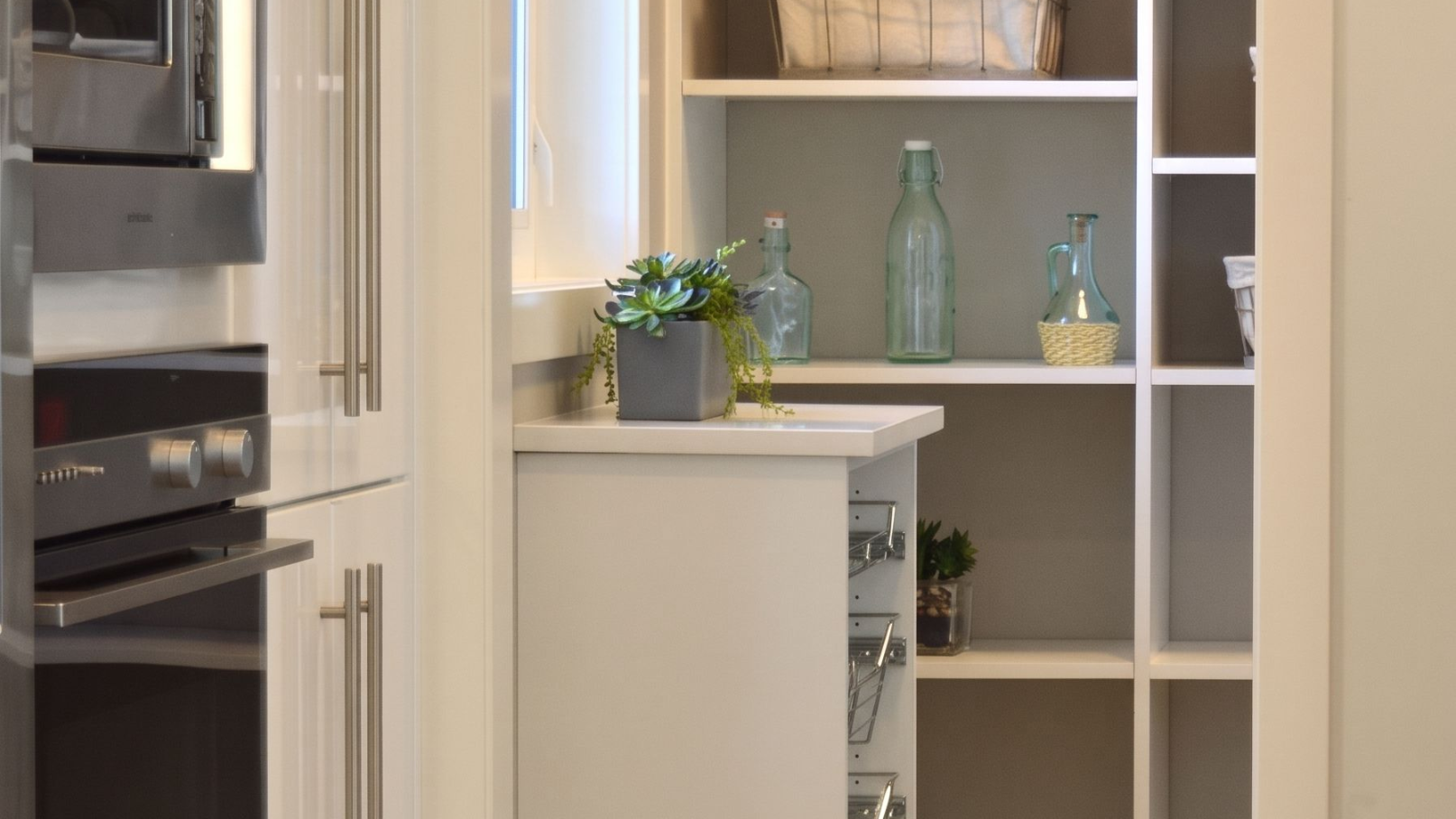
Smaller options like lazy Susans work well in corners, while full-extension drawers suit wide shelves holding pots, small appliances, or bulk goods. Pick drawers with raised sides so items don't slide off when you open them. Once deep shelves become easy to reach, your kitchen pantry holds more without feeling stuffed.
Use Upper Shelves for Items You Need Less Often
Top shelves are the right home for things you don't need every week. Holiday baking supplies, backup paper goods, and the big roasting pan you use twice a year can all live up there. Once they're up high, your easiest-to-reach space opens up for daily staples.
Not sure what to store up high? Start with these:
- Seasonal Supplies: Cookie cutters, holiday platters, and canning jars only come out a few times a year. Store them in labeled bins so you can pull down one container instead of several loose pieces.
- Backup Stock: Extra paper towels, spare cereal boxes, and bulk purchases are perfect for higher shelves. Keep the open package below and restock from above when it runs out, so you never double-buy by accident.
- Lightweight Gadgets: Waffle irons, hand mixers, and salad spinners don't need daily access. Up top, they stay out of the way until the next weekend breakfast or holiday meal.
I stick to one firm rule with clients, and it's keeping heavy items off the highest shelves no matter how rarely they're used. Cast-iron pots and big glass jars become a safety risk when you're pulling them down from overhead. A sturdy step stool tucked into the corner of your kitchen pantry makes those top shelves easy to reach whenever you need them.
Fit More Into Awkward Spaces with Custom Pantry Storage
Small pantries rarely come in perfect rectangles. Sloped ceilings, tight corners, pipes, and narrow walls can leave pockets of space that standard shelving can't touch. Custom pantry storage is built to fit those exact measurements, so no inch goes to waste.
A slim pull-out rack squeezed beside the fridge or curved shelving tucked into a tight corner can recover surprising amounts of space that standard units simply can't reach. The real advantage of going custom is that you can mix drawers, door-mounted storage, and open baskets into one cohesive layout built around how your household actually cooks and shops. I've seen a well-fitted design shift daily habits more than any off-the-shelf solution, because everything finally has a logical place.
That said, custom solutions aren't always the first step. They make the most sense after you've already adjusted your shelves, added pull-out drawers, and used every overlooked corner, and still feel like you're working against the space. At that point, a layout built around your exact dimensions and daily habits stops being a luxury and starts being the most practical fix left
Conclusion
Even a few pantry improvements prove their value during an ordinary week, not just right after you’ve tidied up. You should be able to put groceries away without a struggle, check your supplies before shopping, and start dinner without searching through crowded shelves. For me, those everyday moments are the best measure of whether a kitchen pantry works well. Don’t feel pressured to create a picture-perfect setup or change everything at once. Your space is doing its job if it’s easier to use and stays manageable long after the initial cleanup.
Showroom Location
1824 Empire Industrial Ct
Santa Rosa, CA 95403
Contact Information
Phone: (707) 546-1009
Email: Contact@ClosetCrafters.com
Hours
Showroom & Office Hours
Monday - Friday: 9:00 AM - 5:30 PM
Saturday - Sunday: Closed - Please leave a message and we will get back to you upon our return to the office